Cyberpunk is not a subject. It is a lighting condition with habits attached. The genre grew out of early-eighties science fiction production design, which borrowed from night photographs of Tokyo and Hong Kong: signage stacked vertically, light spilling from shopfronts, streets narrow enough that every surface catches something.
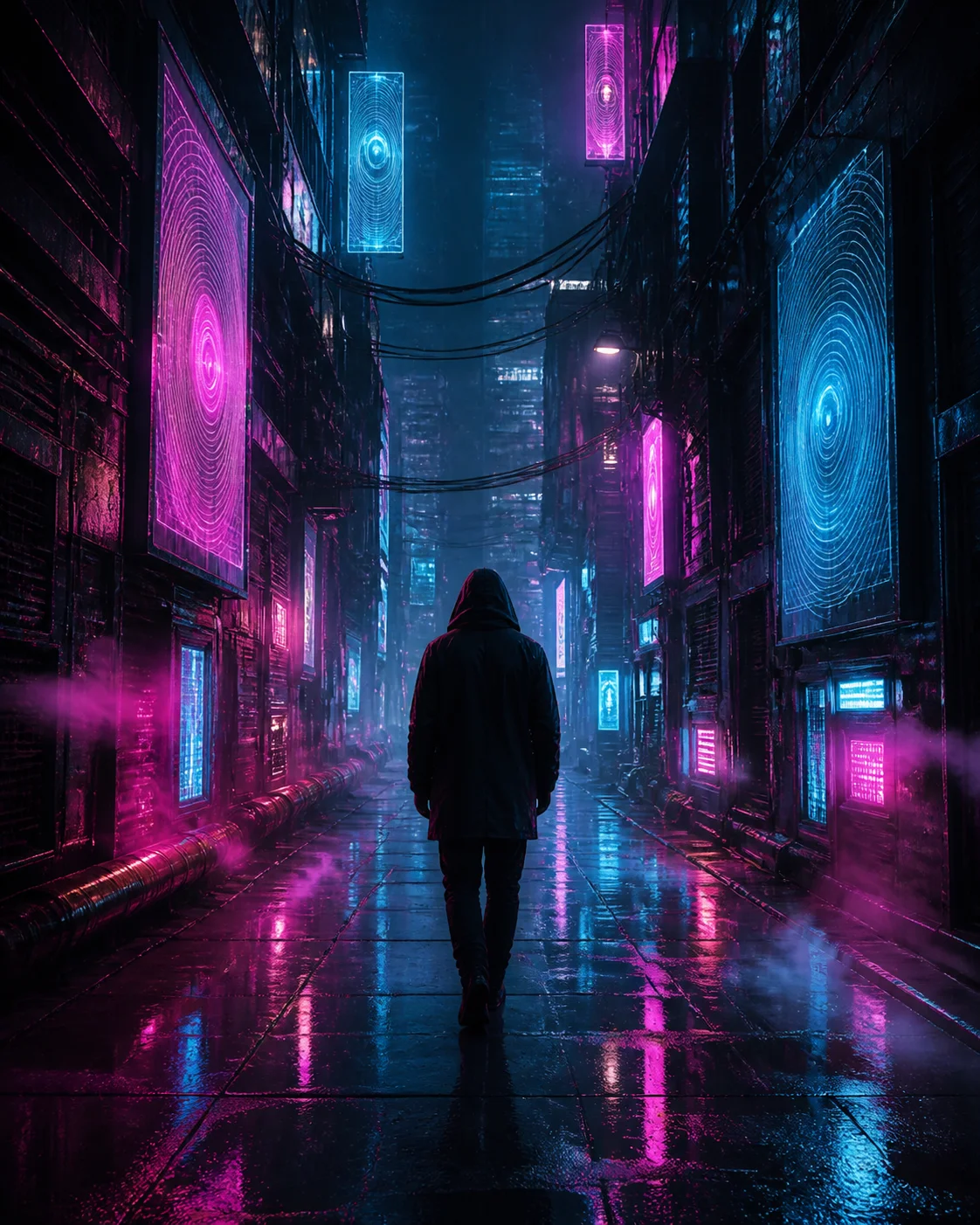
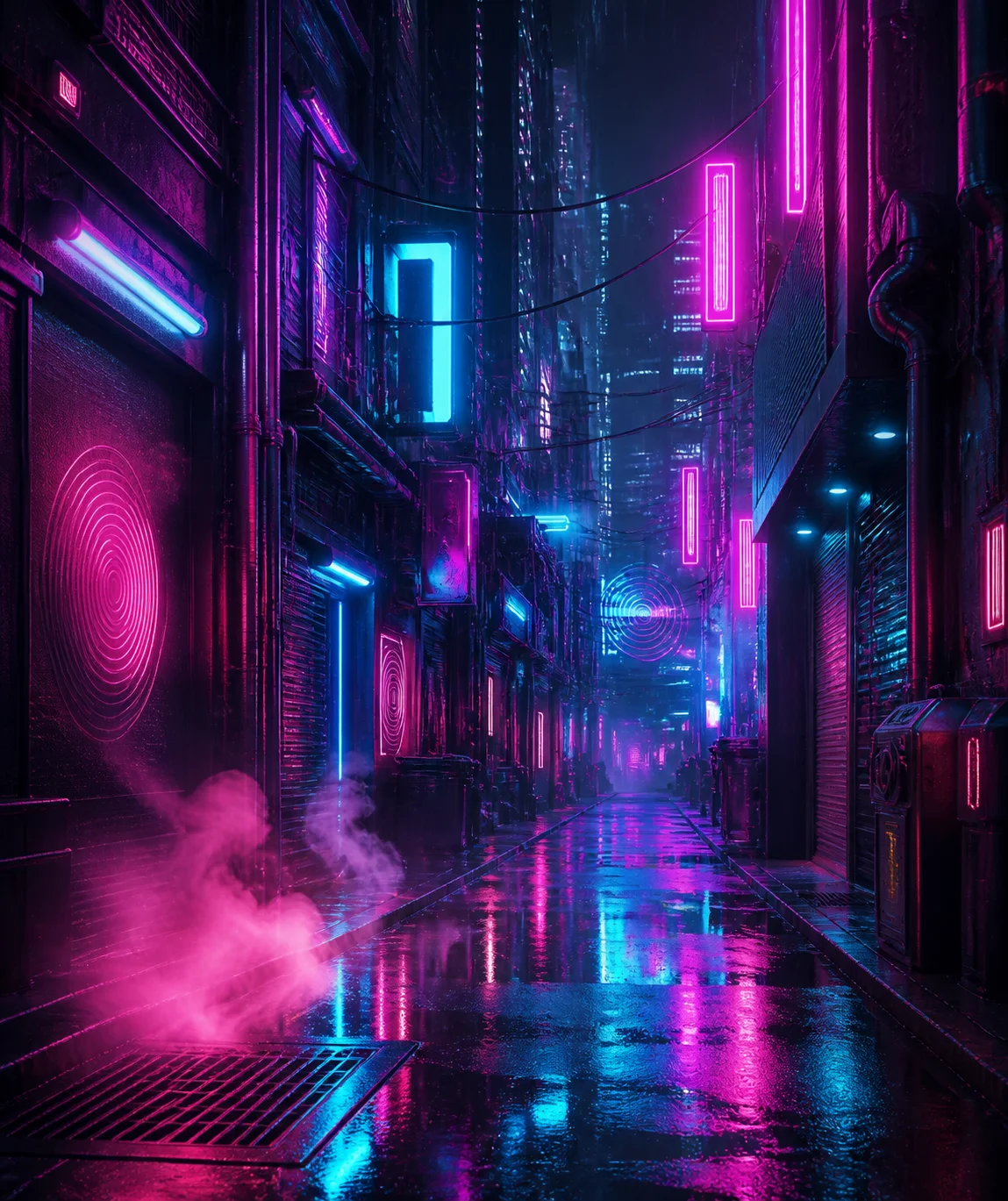
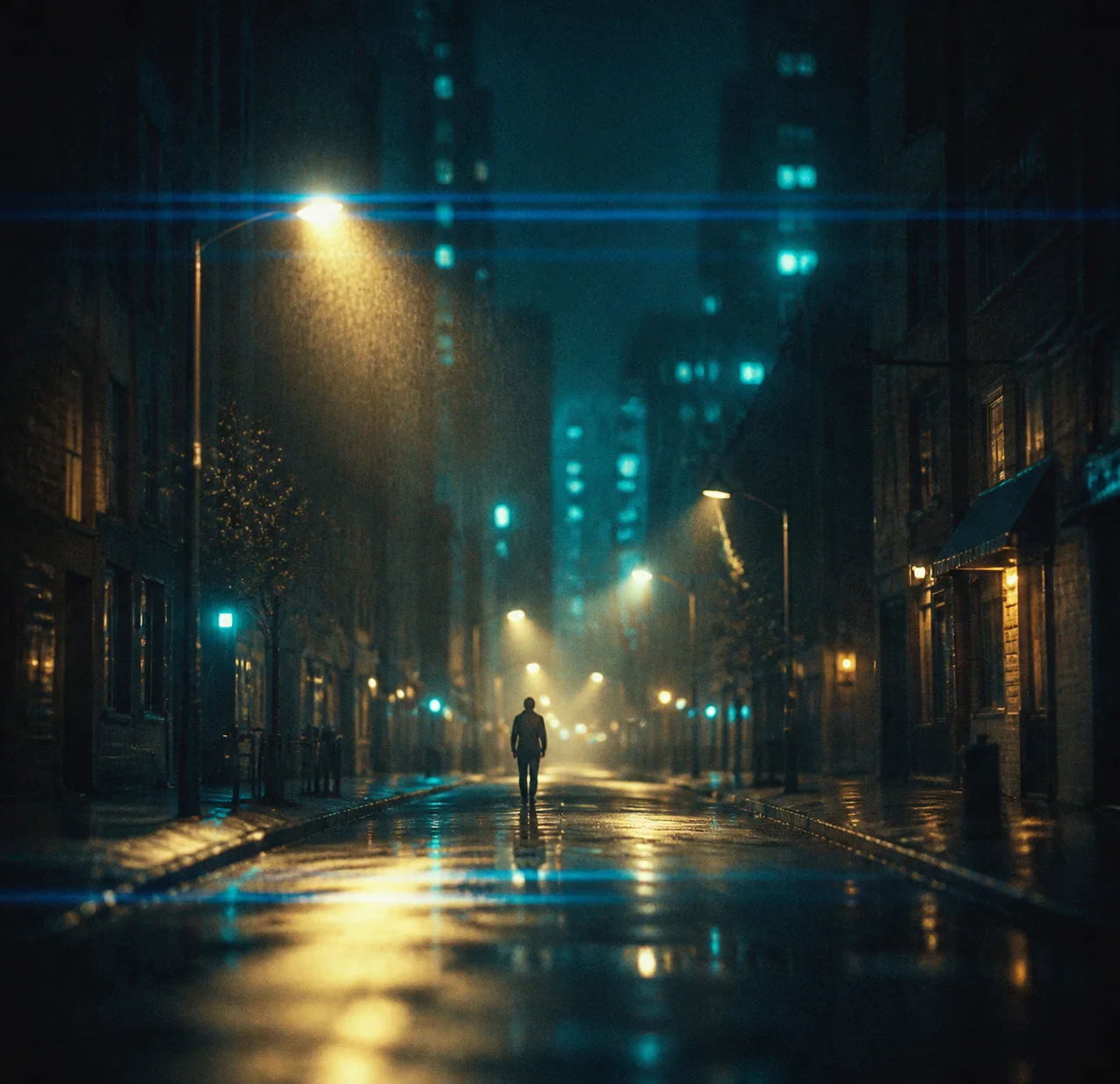
Three decisions do most of the work. The palette runs on complementary opposites, usually magenta against cyan, so a crowded frame stays legible. Exposure is set for the highlights, which crushes everything unlit to near-black. And the ground is wet, because rain doubles every light source.
Then the human details stop it being a light study: a figure with their back to camera, steam off a grate, a sign in a language you do not read. Cyberpunk always looks lived in and slightly broken, and Artlist renders that texture of use well.