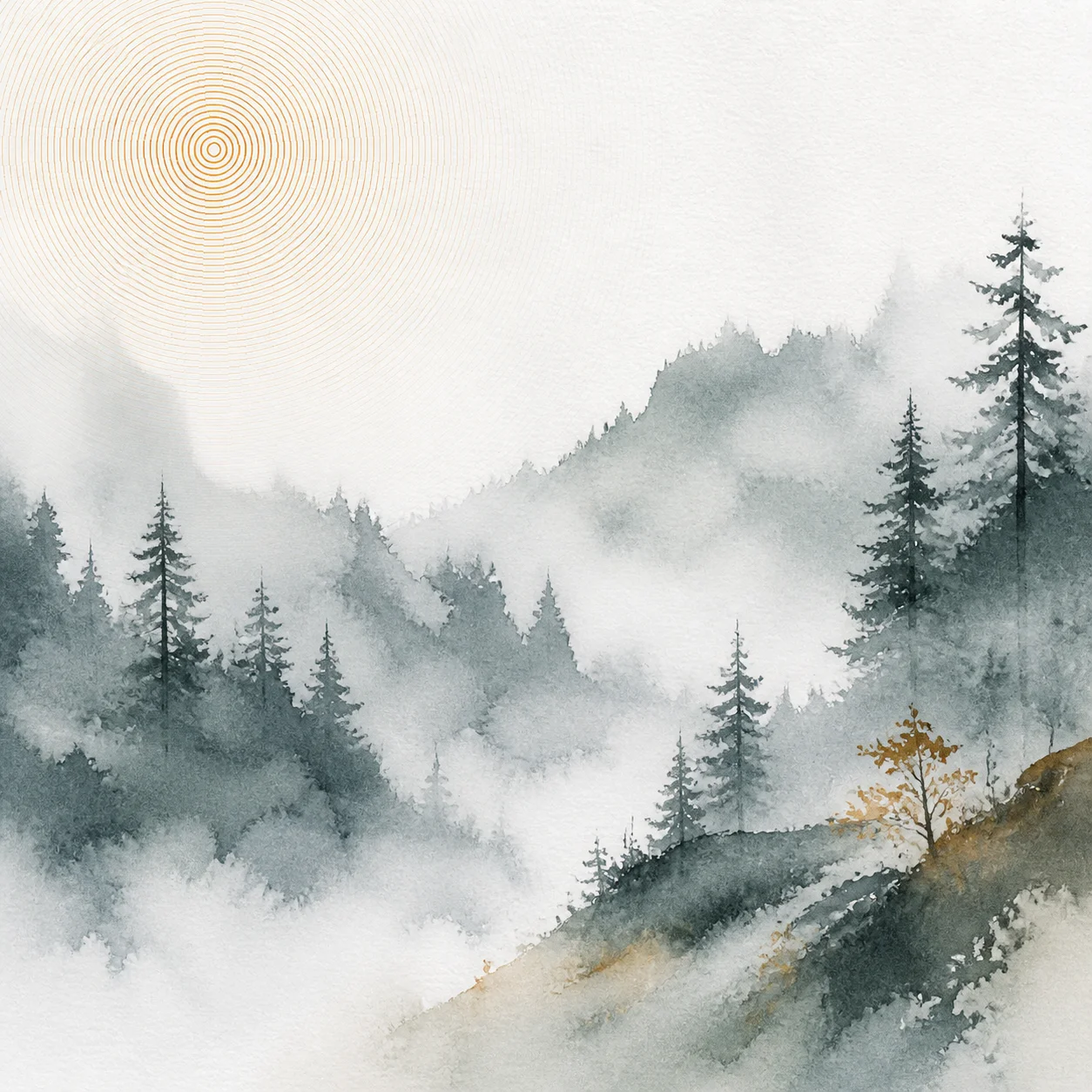
Watercolour is the one medium where the paper is part of the picture. Pigment is transparent and sits in the fibres rather than on top of them, so every light area in a watercolour is not white paint — it is paper that was never touched. Painters plan the whites first and work around them, which is the reverse of almost every other medium.
Everything else follows from water behaving badly on purpose. Wet paint dropped into wet paint blooms outward and settles into soft-edged shapes nobody controlled. Paint left to dry on its own leaves a hard rim, the cauliflower edge that gives a wash its character. Heavier pigments granulate into the paper's texture instead of covering it evenly.
So the risk with a watercolour prompt is asking for too much. A wash that has been corrected loses its transparency and goes flat and grey. Tell Artlist what to leave alone — the untouched paper, the loose corners, the single hard edge — and the render keeps the lightness that makes the style worth choosing.